

Pityriasis lichenoides (PLC / PLEVA)
Pityriasis lichenoides et varioliformis acuta (PLEVA, Mucha-Habermann) · pityriasis lichenoides chronica (PLC) · febrile ulceronecrotic Mucha-Habermann disease (FUMHD)
Pityriasis lichenoides is a T-cell dyscrasia spectrum that may show T-cell clonality, ranging from chronic pityriasis lichenoides chronica (PLC) to acute pityriasis lichenoides et varioliformis acuta (PLEVA / Mucha-Habermann). The severe febrile ulceronecrotic Mucha-Habermann variant (FUMHD) is a paediatric and young-adult systemic emergency. Distinction from mycosis fungoides, lymphomatoid papulosis, drug eruption, varicella and pityriasis rosea matters because PL can overlap with — and in rare cases evolve to — mycosis fungoides or CD30+ lymphoproliferative disease.
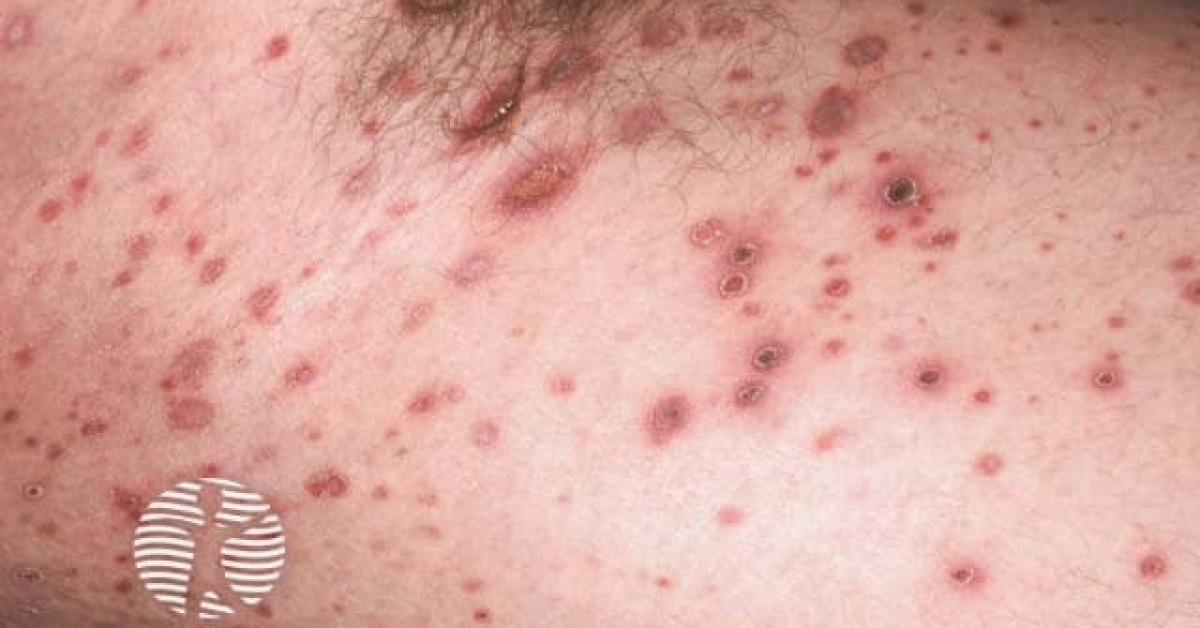
Disease spectrum
- PLC: chronic; smaller, papulosquamous; mica scale; trunk and extremities; relapsing course; younger adults / children.
- PLEVA (Mucha-Habermann): acute; vesicular, necrotic, ulcerative; varioliform scars; explosive crops.
- FUMHD: rare; abrupt-onset confluent ulceronecrotic lesions, fever, systemic toxicity, multi-organ involvement; mortality up to 25% historically.
Clinical features
- Distribution: trunk, proximal limbs; symmetric; spares face and palms / soles usually.
- PLC: pink-brown papules 5-10 mm with adherent "mica" scale that detaches in one piece; resolves with hypopigmentation.
- PLEVA: vesicles, haemorrhagic crust, central necrosis; heals with varioliform pock-mark scarring.
- Course: relapsing-remitting; can last months to years.
Investigations
- Skin biopsy — wedge-shaped lymphocytic infiltrate, basal vacuolar change, necrotic keratinocytes (PLEVA more severe); CD8+ T-cell predominance; CD30+ scattered.
- T-cell receptor gene rearrangement often clonal — does not equal CTCL.
- Bloods in PLEVA / FUMHD: FBC, CRP, LFT, U&E, LDH; monitor for systemic involvement.
- Long-term surveillance for evolution to mycosis fungoides or lymphomatoid papulosis (rare but recognised).
Differential diagnosis
- Pityriasis rosea — herald patch, Christmas tree, larger oval lesions, collarette scale.
- Lymphomatoid papulosis — overlap; larger crops; biopsy CD30+ blastic cells.
- Mycosis fungoides (hypopigmented / patch) — chronic, asymmetric, more persistent fixed lesions.
- Guttate psoriasis — well-demarcated scaly papules without necrosis.
- Varicella — vesicular dermatomal / disseminated; PCR.
- Drug eruption — temporal medication link.
- Secondary syphilis, scabies, vasculitis.
Management
- PLC:
- Mid-potency topical corticosteroids ± emollients.
- Oral antibiotics with immunomodulatory effects: erythromycin (paediatric), tetracycline (adults) for 4-12 weeks.
- Phototherapy: NBUVB or PUVA for diffuse disease.
- PLEVA:
- As PLC plus consider oral methotrexate (7.5-25 mg weekly) for refractory disease.
- Ciclosporin or short-course oral steroids in severe / FUMHD cases.
- FUMHD: admission; aggressive supportive care; IV methotrexate, IVIG, ciclosporin, anti-TNFα, or stem-cell transplant in extreme cases.
- Long-term dermatology follow-up given small risk of evolution to CTCL.
References
- Bowers S, Warshaw EM. Pityriasis lichenoides and its subtypes. J Am Acad Dermatol. 2006;55:557-572.
- Khachemoune A, Blyumin ML. Pityriasis lichenoides: pathophysiology, classification, and treatment. Am J Clin Dermatol. 2007;8:29-36.
- Wahie S et al. Pityriasis lichenoides: the differences between children and adults. Br J Dermatol. 2007;157:941-945.
- Sotiriou E et al. Febrile ulceronecrotic Mucha-Habermann disease: a case series and review of the literature. J Eur Acad Dermatol Venereol. 2008;22:1232-1239.
Spot a correction?
If any clinical statement, citation or link on this page needs updating, please email admin@skinoncology.net with the page name, the proposed correction and the supporting source.