

Allergic contact dermatitis
ACD · type IV hypersensitivity dermatitis · contact allergy
Allergic contact dermatitis is a delayed type-IV hypersensitivity reaction to a topical sensitiser, mediated by hapten-specific memory T cells. UK common allergens include nickel, fragrance mix, cobalt, paraphenylenediamine (PPD), Compositae mix, Myroxylon pereirae (balsam of Peru), preservatives (methylisothiazolinone, formaldehyde, parabens, quaternium-15) and topical antibiotics (neomycin, bacitracin). Skin-oncology relevance: post-Mohs / wound-dressing reactions, topical-therapy allergens (5-FU, imiquimod, lidocaine), and ICI-related contact-like exacerbations. Patch testing remains the diagnostic standard.
Pathogenesis
- Type-IV delayed hypersensitivity; CD4+ / CD8+ T-cell mediated.
- Two phases:
- Sensitisation: hapten binds protein → Langerhans cell presentation → T-cell memory (10-14 days).
- Elicitation: re-exposure → eczematous reaction at site within 48-72 hours.
- Common UK allergens (BSCA standard series): nickel, cobalt, chromium, fragrance, balsam of Peru, PPD, preservatives, rubber chemicals, antibiotics, plant allergens.
Clinical features
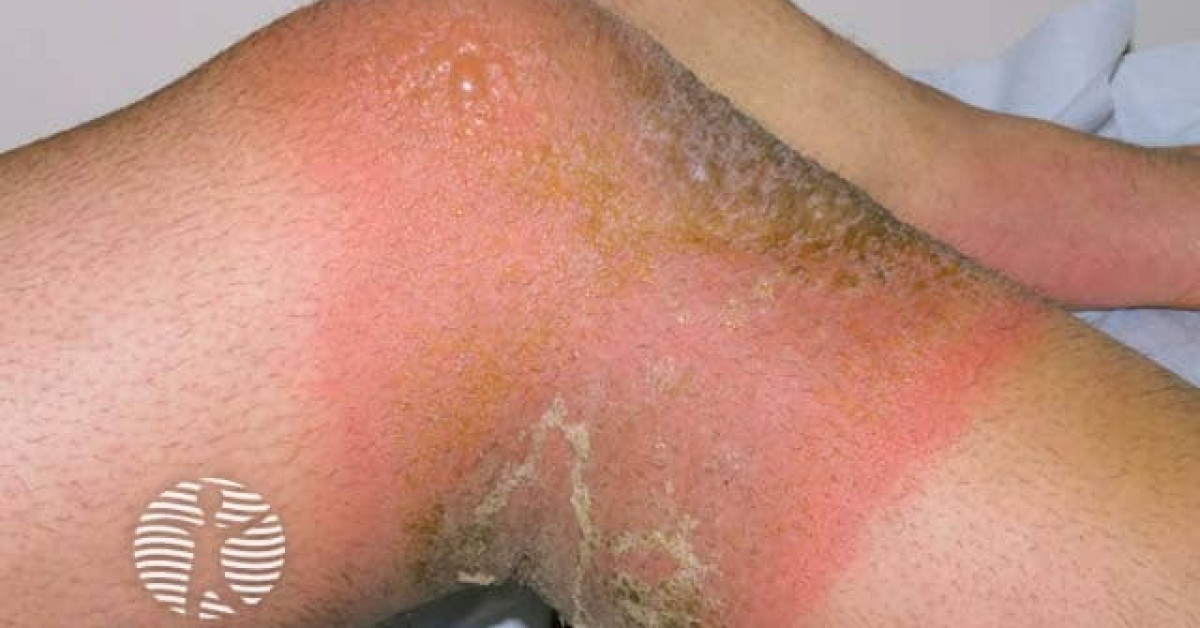
- Eczematous pruritic erythema with vesicles / bullae in acute phase; lichenification chronic.
- Geometric / linear distribution in keeping with contactant.
- Common patterns:
- Eyelid: nail varnish (via fingers), preservatives in cosmetics, latex.
- Earlobe / neck: nickel from jewellery.
- Wrist: watch strap nickel / leather chromium.
- Hands: occupational; latex, rubber accelerators, preservatives.
- Feet: rubber, leather chromium.
- Genital / perianal: preservatives, fragrance.
- Post-Mohs / wound: dressing adhesives (acrylates), antibiotic ointment, lidocaine.
- Onset 24-72 hours after exposure; chronicity if exposure ongoing.
Patch testing
- Patch testing: gold standard diagnosis.
- British standard series (40-50 allergens); plus extended series tailored to occupation, body site or suspected sensitiser.
- Read at 48 hours (D2), 96 hours (D4); some allergens require 7-day read.
- Grading (ICDRG):
- ?+ (doubtful), + (weak), ++ (strong), +++ (extreme), IR (irritant).
- Patient's own products may be patch-tested ("as is" or diluted appropriately).
- Refer to UK BSCA contact-dermatitis centres for specialist patch testing.
Differentials
- Irritant contact dermatitis — non-immunologic; immediate burn-like; occupational hand wash.
- Atopic eczema — flexural, atopic background.
- Discoid eczema — round patches.
- Tinea — annular advancing edge.
- Phytophotodermatitis — UV-dependent streaky pattern.
- Drug eruption — systemic exposure.
- ICI-related eczematous dermatitis.
Management
- Identify and avoid the allergen — patch testing followed by structured allergen-avoidance counselling and substitute products.
- Topical: mid-to-high-potency corticosteroid 2-3 weeks; topical calcineurin inhibitors for face / flexures.
- Oral: prednisolone short course for severe flare; sedating antihistamine for itch.
- Phototherapy (NBUVB / PUVA) for chronic / refractory dermatitis.
- Systemic immunosuppression: methotrexate, azathioprine, mycophenolate, ciclosporin in severe / occupational-related disability.
- Dupilumab being evaluated; case series suggest benefit in some severe ACD.
- Occupational: consider Health and Safety Executive (HSE) reporting; protective clothing; gloves (nitrile preferred); skin care regime.
- Counsel: persistent dermatitis up to weeks after allergen-removal; chronic ACD has 30-50% long-term persistence.
References
- Johansen JD et al. European Society of Contact Dermatitis guideline for diagnostic patch testing — recommendations on best practice. Contact Dermatitis. 2015;73:195-221.
- British Society of Cutaneous Allergy (BSCA). British baseline series 2019. London: BSCA; 2019.
- Brasch J et al. Guideline contact dermatitis: S1-Guidelines of the German Contact Allergy Group. Allergo J Int. 2014;23:126-138.
- Bourke J et al. Guidelines for the management of contact dermatitis: an update. Br J Dermatol. 2009;160:946-954.
Spot a correction?
If any clinical statement, citation or link on this page needs updating, please email admin@skinoncology.net with the page name, the proposed correction and the supporting source.