

Phytophotodermatitis
Berloque dermatitis (perfume variant) · meadow-grass dermatitis · Mexican bartender dermatitis · lime dermatitis
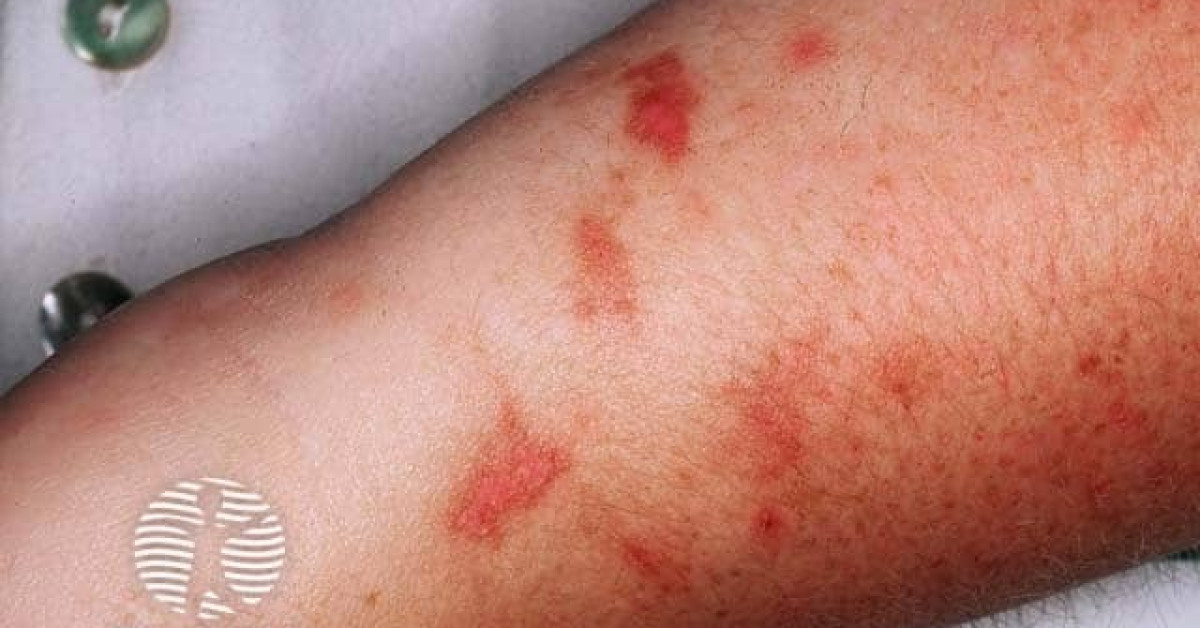
Phytophotodermatitis is a non-immunological photo-irritant reaction caused by skin contact with plant-derived furocoumarins (psoralens) — most commonly from citrus juices (lime, lemon, bergamot), celery, parsnip, parsley, fig sap, hogweed and rue — followed by UV-A exposure. It produces an acute bullous erythema with characteristic streaks and drip patterns, healing with hyperpigmentation that may persist for months and is a frequent mimic of melanoma in situ, fixed drug eruption and physical abuse (in children).
Pathogenesis
- Furocoumarins (psoralens: 5-MOP, 8-MOP, bergapten) absorb UV-A (320-400 nm) and intercalate with DNA, causing keratinocyte injury.
- Type-IV-independent — does not require sensitisation.
- Common plant sources:
- Citrus rind / juice — particularly lime (cocktails, Mexican bartender dermatitis), lemon, grapefruit.
- Apiaceae — celery, parsnip, parsley, dill, fennel.
- Giant hogweed (Heracleum mantegazzianum) — UK invasive species; severe contact reactions in children.
- Fig (Ficus carica) sap.
- Rue, mango skin, bergamot oil (Berloque).
Clinical features
- Acute phase (24-72 h): erythema, oedema, vesicles, bullae in linear streaks / drip pattern matching contact (especially classical "cocktail drinker" with lime juice on hands).
- Painful / burning quality.
- Subacute: crusting, desquamation.
- Chronic phase: post-inflammatory hyperpigmentation that may persist for weeks to months and follow the streaky / handprint contact pattern.
- History — recent outdoor activity, gardening, cocktail-making, sun exposure.
Differential diagnosis
- Allergic contact dermatitis — pruritus dominates; geometric not linear streak.
- Fixed drug eruption — round / oval, recurs at same site.
- Melanoma in situ — irregular pigmented patch; if streaky pattern doesn't resolve consider biopsy.
- Cutaneous porphyria — chronic photoreactive blistering on dorsal hands.
- Non-accidental injury in children — handprint patterns may be misidentified; thorough history vital.
- Cellulitis in the acute phase.
Management
- Avoid further sun exposure and trigger contact; wash hands after handling citrus / parsnip / celery.
- Cool compresses, bland emollient.
- Topical corticosteroids (potent class III-IV) for 5-7 days in acute phase.
- Oral analgesia.
- Severe bullous reaction: short course oral prednisolone (~30-40 mg taper over 5-7 days).
- Hyperpigmentation:
- Strict UV photoprotection (SPF 50+, mineral preference).
- Hydroquinone 4%, tretinoin, azelaic acid, kojic acid combinations.
- Q-switched / picosecond laser if persistent.
- Counsel about months-long resolution timeline.
Practical points
- Consider in any patient presenting with streaky / drip-pattern bullae or hyperpigmentation.
- Persistent linear hyperpigmentation on dorsal hands — ask about recent cocktail-making (lime), gardening, hogweed contact.
- Always document carefully when a child presents with hand-shaped pigment to avoid mislabelling as non-accidental injury; corroborate with history (outdoor play, parental fruit-handling).
- In skin-oncology clinic, atypical pigment patterns that are streaky and not following Blaschko lines should prompt phytophotodermatitis enquiry before biopsy.
References
- Wagner AM et al. Phytophotodermatitis. J Am Acad Dermatol. 2002;47:S179-S180.
- Pomeranz MK, Karen JK. Phytophotodermatitis and limes. N Engl J Med. 2007;357:e1.
- Bowers AG. Phytophotodermatitis. Am J Contact Dermat. 1999;10:89-93.
- Furniss D, Adams T. Herb of grace: an unusual cause of phytophotodermatitis mimicking burn injury. J Burn Care Res. 2007;28:767-769.
Spot a correction?
If any clinical statement, citation or link on this page needs updating, please email admin@skinoncology.net with the page name, the proposed correction and the supporting source.